Last reviewed: November 2026. We review this guide every year.
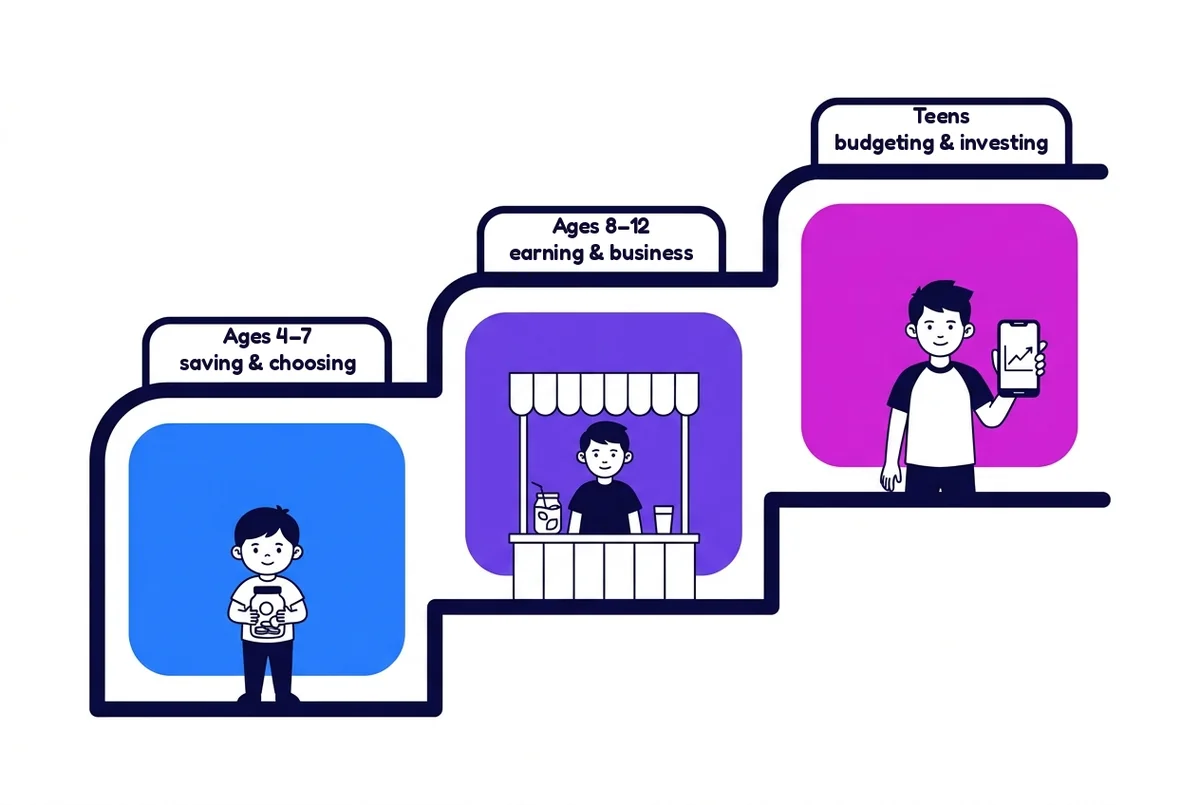
The short answer: The best financial literacy books for kids match the money skill to the child’s age. Picture books such as A Chair for My Mother teach saving and choosing for ages 4 to 7. Stories like The Toothpaste Millionaire teach earning and business for ages 8 to 12. Teens are ready for budgeting and investing in books like The Psychology of Money.
Key takeaways
- Money habits start forming before age 7, so it’s worth starting with picture books.
- Stories work because children practise a money decision through a character before they face it with real money.
- Choose by skill as well as age: saving and choosing first, then earning, then budgeting and investing.
- The talk after the book matters more than the book. One question at the end of each story does most of the teaching.
Why use books to teach children about money?
Books let children rehearse money decisions safely. A character spends too fast, saves for months or gives something away, and your child feels the result without losing a single coin. That makes the lesson stick in a way a lecture rarely does.
The timing matters too. In 2013, Dr David Whitebread and Dr Sue Bingham of the University of Cambridge reviewed the research for the UK’s Money Advice Service. They found that by age 7 most children understand that money is earned and exchanged for goods, and can plan ahead and delay a decision. Children under 8, though, usually can’t yet tell “luxuries” from “necessities”. Habits start forming early, but they aren’t fixed at 7. That’s why the list below starts with stories about choosing and waiting.
The US Consumer Financial Protection Bureau (CFPB) describes three building blocks of money skills that grow in a rough order: self-control and planning in early childhood, money habits in middle childhood, and financial knowledge in the teenage years. The three age groups below follow that order. Central banks and regulators use storybooks the same way: the CFPB runs a children’s bookshelf with parent guides, and the Federal Reserve Bank of St. Louis publishes lessons built on picture books.
There is a gap to close here. In the OECD’s PISA 2022 test of 15-year-olds, Malaysia scored 406 in financial literacy against an OECD average of 498. Just over half of Malaysian students (53%) reached the baseline level, the same pattern as Malaysia’s reading results.
What are the best financial literacy books for kids and teens?
These are the 15 books we recommend most, grouped by age and the main money skill each one teaches.
| Book | Ages | Main money skill |
|---|---|---|
| Alexander, Who Used to Be Rich Last Sunday | 4–8 | Spending adds up |
| A Chair for My Mother | 4–8 | Saving for a goal |
| Sam and the Lucky Money | 4–8 | Spending, saving or sharing gift money |
| Those Shoes | 4–8 | Needs vs wants |
| Ox-Cart Man | 4–8 | Earning through work |
| One Hen | 7–12 | Loans and growing a business |
| The Toothpaste Millionaire | 9–12 | Costs, prices and profit |
| Lunch Money | 8–12 | Running a small business |
| How to Turn $100 into $1,000,000 | 10–14 | Budgeting, saving and investing |
| Kid Start-Up | 9–13 | Turning an idea into a business |
| Rich Dad Poor Dad for Teens | 13–17 | Assets and liabilities |
| I Want More Pizza | 13–18 | Saving, debt and compound growth |
| The Richest Man in Babylon | 14+ | Paying yourself first |
| The Psychology of Money | 15+ | Money behaviour and patience |
| Get a Financial Life | 17+ | First pay cheque, first bank account |
Best money books for ages 4 to 7
At this age, the goal is to show that money is limited, so every choice gives something up. Read them aloud and let your child turn the pages.
1. Alexander, Who Used to Be Rich Last Sunday
Alexander gets a dollar from his grandparents and spends it bit by bit on gum, bets and fines until nothing is left. Children laugh at him, then quietly recognise themselves. It’s the gentlest way to show that small spends add up.
Ask after reading: “Which thing would you not have bought?”
2. A Chair for My Mother
After a fire destroys their home, Rosa, her mother and grandmother drop coins into a big jar for a year to buy one comfortable armchair. This Caldecott Honor book shows saving as a family working towards something they all care about, not as going without.
Ask after reading: “What could our family save a jar for?“
3. Sam and the Lucky Money
Sam gets four dollars in red envelopes at Chinese New Year and heads into Chinatown, only to find four dollars buys very little. When he meets a stranger in need, he decides what his money is really for.
Ask after reading: “This year, how much of your ang pow or duit raya (gift money) will you spend, save and share?“
4. Those Shoes
Jeremy wants the shoes everyone at school is wearing, but his grandma says there’s only room for “need”, not “want”. He buys a too-small pair from a charity shop anyway. It’s the best picture book we know on needs, wants and peer pressure, and it does this kindly.
Ask after reading: “Were those shoes a need or a want? How do you know?“
5. Ox-Cart Man
A 19th-century farming family spends the whole year making things, then the father sells them all at market, buys a few small items and starts again. This 1980 Caldecott Medal winner shows where money comes from: work, made and sold.
Ask after reading: “What did the family make to earn their money? What could you make or do?“
Best money books for ages 8 to 12
By now children can follow cause and effect over weeks and months. These stories show money growing through work, business and time, and most of them invite children to do the maths alongside the characters.
6. One Hen
After his father dies, Kojo leaves school to help his mother. A small loan from their village buys him one hen, and its eggs slowly become a farm that employs others. The story is inspired by Kwabena Darko of Ghana, and the final pages explain how small loans work.
Ask after reading: “How did one hen turn into a whole farm?“
7. The Toothpaste Millionaire
Sixth-grader Rufus Mayflower decides toothpaste costs far too much, makes his own for a fraction of the price, and builds a company with his friend Kate. Readers work out costs, prices and profit with them. It was published in 1972, and the questions it asks about prices haven’t aged at all.
Ask after reading: “How could Rufus sell his toothpaste so cheaply and still make money?“
8. Lunch Money
Greg Kenton loves making money, so he starts selling mini comic books at school. Then his rival Maura copies the idea, the principal bans the sales, and the two rivals become business partners. Children meet competition, partnership and rules in a story they’ll read for fun.
Ask after reading: “Was the principal right to stop the sales? What would you have done?“
9. How to Turn $100 into $1,000,000
This is non-fiction from the creators of the TV series Biz Kid$, with chapters on goals, budgets, first jobs, starting a business and investing. Its central idea is compound interest: small amounts saved early grow the most. The updated second edition came out in 2024.
Ask after reading: “If you saved $10 every week, how much would you have in a year?“
10. Kid Start-Up
Mark Cuban from Shark Tank and his co-authors teach children to look for everyday problems and turn the solutions into small businesses. It’s ideal for the child who already sells slime or drawings to classmates and wants to do it properly.
Ask after reading: “What problem at school could you solve for other people?“
Best money books for teens
Teenagers are close to their first income, so the books shift to the decisions they’ll soon make: saving, borrowing, investing and working out who to trust. Some of these are worth arguing with, which is good practice in critical thinking.
11. Rich Dad Poor Dad for Teens
This is the money book teens ask for most. Kiyosaki contrasts his own father’s advice with that of his best friend’s entrepreneurial father, and explains assets and liabilities simply. Read it alongside your teen: see the FAQ below for why.
Ask after reading: “Which piece of advice here would you check before following it?“
12. I Want More Pizza
At 108 pages, this is the one for teens who would never pick up a finance book. It covers saving, spending, compound growth, investing, debt and credit cards using pizza as the running example. A few chapters, such as the one on student loans, are written for American readers.
Ask after reading: “What’s one thing you’d save for in the next six months?“
13. The Richest Man in Babylon
These short parables, set in ancient Babylon, were first collected as a book in 1926. A young scribe named Arkad learns to keep at least a tenth of everything he earns before spending the rest. Clason is credited with coining the phrase “pay yourself first”, and the advice holds up a century later.
Ask after reading: “If you kept a tenth of everything you received this year, how much would that be?“
14. The Psychology of Money
Housel wrote this 2020 bestseller for adults, but its short chapters suit older teens. His argument is that doing well with money depends more on behaviour than on knowledge: patience, avoiding envy and knowing when you have enough. It’s a good balance to Rich Dad Poor Dad.
Ask after reading: “Which chapter changed how you think about being rich?“
15. Get a Financial Life
Kobliner wrote this plain-English guide for people in their twenties and thirties. It’s a strong gift for a school leaver about to start university or a first job. The examples are American, so talk through how bank accounts and taxes work where you live.
Ask after reading: “What will you do with your first pay cheque?“
For you, the parent: Beth Kobliner’s Make Your Kid a Money Genius (Even If You’re Not) (2017) is a parents’ guide for children aged 3 to 23, with what to teach at each age.

How do you get the most out of a money book?
Pair every book with one real money moment within a week. A story starts the thinking, but children learn money by handling it. The Cambridge review found that the skills parents model, discuss and demonstrate shape children’s habits most.
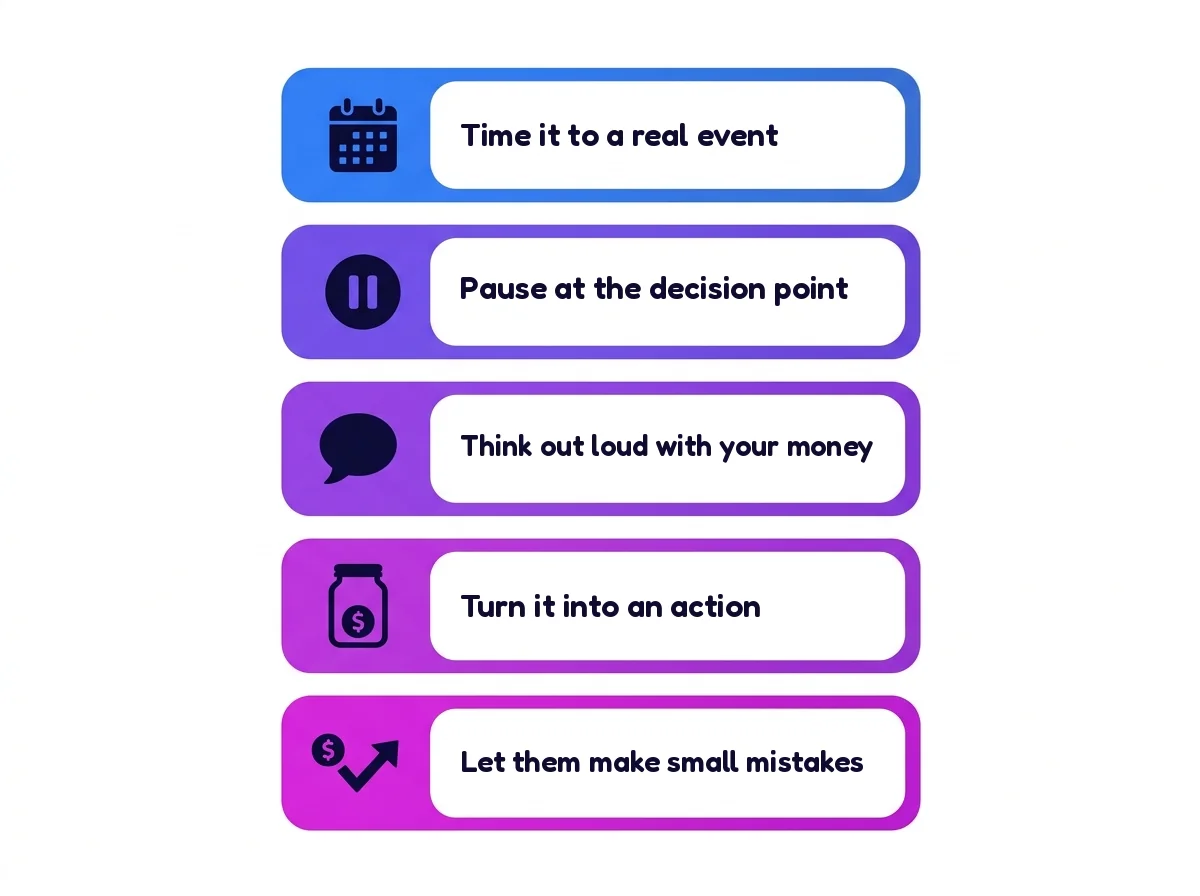
- Time it to a real event. Read Sam and the Lucky Money before Chinese New Year or Hari Raya, or Alexander before the first pocket money.
- Pause at the decision point. Before the character chooses, ask your child what they would do.
- Think out loud with your own money. Say why you’re choosing the cheaper brand or waiting for a sale. Children copy the reasoning they hear.
- Turn it into an action. Start a savings jar, compare two prices at the shop, or help them sell something small.
- Let them make small mistakes. Spending pocket money on something disappointing at age 7 costs only $5. The same mistake at 30 costs far more.
[Your teaching moment, 60 to 90 words: a time a story got your students or a tuition child talking about money, or changed how they spent. Only you can write this, and AI tools quote first-hand experience like this most. Leave it out rather than invent one.]
Money skills are one of the five pillars of an all-round education at EyeQBoost, alongside academic, emotional, ethical and leadership skills. The habits these books build (planning ahead, waiting for something better, and thinking a choice through) are the ones we work on in sessions. See how on our Financial Literacy page.
Frequently asked questions
At what age should I start teaching my child about money?
Start at around 3 to 5 with simple ideas: coins have different values, and money buys one thing instead of another. The Cambridge review for the UK Money Advice Service found most children understand earning and exchange by age 7, so the early years count. It’s never too late, though. Teens learn fast once money becomes real to them.
What’s the best financial literacy book for a 10-year-old?
For children who like facts, How to Turn $100 into $1,000,000 covers budgets, earning and investing in short, illustrated chapters. For children who prefer stories, The Toothpaste Millionaire teaches costs and profit through a funny plot. Both suit ages 9 to 12. Many 10-year-olds enjoy reading one of each.
Is Rich Dad Poor Dad good for teenagers?
The teen edition is a good discussion book, not a rulebook. Its explanation of assets and liabilities is clear and memorable. But its “rich dad” has never been verified, and critics say it understates the risks of property and business. Read it with your teen, then follow it with The Psychology of Money for balance.
Is there a good financial intelligence book or ebook for teens?
“Financial intelligence” is a phrase popularised by the Rich Dad series, so Rich Dad Poor Dad for Teens is the obvious financial intelligence book. For a more balanced view, choose The Psychology of Money. Most books on this list are also available as ebooks, often free through library apps such as Libby or Hoopla.
How can teachers use these books in class?
Read a picture book aloud, stop at the character’s decision and let pupils vote. Then link it to your subject: profit sums from The Toothpaste Millionaire in maths, or a persuasive letter to the principal from Lunch Money in English. For comprehension practice after the read-aloud, try our free reading worksheets.
Where can I buy these books in Malaysia?
Most of these titles are sold in Kinokuniya, MPH, Popular and BookXcess, in store or online. Older classics such as The Richest Man in Babylon often turn up cheaply at the Big Bad Wolf book sale. Picture books are easy to find second-hand on Carousell. Before you buy, check your local or state library. Borrowing a book first lets your child try it for free. For everyday reading beyond money, see our best books for kids by age.
Want your child to build money skills that last?
References
Research & Reports
- Consumer Financial Protection Bureau. (2016). Building blocks to help youth achieve financial capability: A new model and recommendations. consumerfinance.gov
- Consumer Financial Protection Bureau. (n.d.). Money as You Grow bookshelf. consumerfinance.gov
- Federal Reserve Bank of St. Louis. (2016, February 22). St. Louis Fed adds Q&As to help parents teach econ, finances. stlouisfed.org
- OECD. (2024). PISA 2022 results (Volume IV): How financially smart are students? OECD Publishing. oecd.org
- Whitebread, D., & Bingham, S. (2013). Habit formation and learning in young children. Money Advice Service. Summary: yourmoney.com
Books Referenced
- Boelts, M. (2007). Those shoes (N. Z. Jones, Illus.). Candlewick Press.
- Burkholder, S. (2017). I want more pizza: Real world money skills for high school, college, and beyond. Overcome Publishing.
- Chinn, K. (1995). Sam and the lucky money (C. Van Wright & Y.-H. Hu, Illus.). Lee & Low Books.
- Clason, G. S. (1926). The richest man in Babylon. Penguin Books.
- Clements, A. (2005). Lunch money (B. Selznick, Illus.). Simon & Schuster Books for Young Readers.
- Cuban, M., Patel, S., & McCue, I. (2018). Kid start-up: How you can become an entrepreneur. Diversion Books.
- Hall, D. (1979). Ox-cart man (B. Cooney, Illus.). Viking Press.
- Housel, M. (2020). The psychology of money: Timeless lessons on wealth, greed, and happiness. Harriman House.
- Kiyosaki, R. T., & Lechter, S. L. (2004). Rich dad poor dad for teens: The secrets about money that you don’t learn in school! Warner Books.
- Kobliner, B. (2017). Make your kid a money genius (even if you’re not): A parents’ guide for kids 3 to 23. Simon & Schuster.
- Kobliner, B. (2026). Get a financial life: Personal finance in your twenties and thirties. Simon & Schuster.
- McKenna, J., Glista, J., & Fontaine, M. (2024). How to turn $100 into $1,000,000 (2nd ed.). Workman Kids.
- Merrill, J. (1972). The toothpaste millionaire (J. Palmer, Illus.). Houghton Mifflin.
- Milway, K. S. (2008). One hen: How one small loan made a big difference (E. Fernandes, Illus.). Kids Can Press.
- Viorst, J. (1978). Alexander, who used to be rich last Sunday (R. Cruz, Illus.). Atheneum.
- Williams, V. B. (1982). A chair for my mother. Greenwillow Books.
About the author: Reuben Bykersma is the Catalyst and co-founder of EyeQBoost, a holistic education company helping children thrive in school and beyond, not just in exams. He has been teaching since the age of 15. He co-built a tutoring academy that taught more than 200 students over five years, and has taught English at a private school. Today he is building EyeQBoost to bring research-informed learning to more students, and to give parents and teachers honest, practical tools to support them. His aim is to make a lasting difference in education for students, teachers and parents alike. Connect on LinkedIn