Last reviewed: November 2026. We review this guide every year.
The short answer: The best books for kids match three things: their age, their reading level and, most of all, their interests. Choose short chapter books and series at 7 to 8, funny, fast reads at 9 to 10, full novels at 11 to 12, memoirs and dystopias at 13 to 14, and classics at 15 to 17. Then let your child make the final choice.
Key takeaways
- Children are far more likely to finish a book they chose themselves.
- The five-finger rule is the quickest check: 2 or 3 unknown words on a page means a book is just right.
- A reading level measures how hard the words are, not whether the content suits your child’s age.
- Graphic novels count as real reading and often win over reluctant readers.
- Keep reading aloud after age 8; most families stop too soon.
How do you choose reading books to read at home?
Check three things, in this order: interest, then level, then content. Getting children to want to read is now the hard part. In the UK’s largest annual survey of young readers, only 36.1% of 8- to 18-year-olds said they enjoyed reading in their free time in 2026. Malaysian children face the same challenge, as our look at reading and literacy in Malaysia shows. Any teacher who has watched a class light up over the right book, and switch off over the wrong one, knows the title makes the difference.
1. Interest first: let them choose
This is the step most parents skip, and the one with the strongest evidence. In Scholastic’s Kids & Family Reading Report, 89% of children aged 6 to 17 said their favourite books are the ones they picked themselves, and nine in ten said they are more likely to finish a book they chose.
So offer a shortlist, not an assignment. Pick three or four books from the list below and let your child make the final call. Guide the choice; don’t make it for them.
2. Level second: the five-finger rule
To check whether a book for kids is the right difficulty, teachers use the five-finger rule. Your child reads one page and holds up a finger for each word they don’t know. Scholastic’s version reads the count like this:
- 0–1 fingers: too easy (great for relaxing, not for stretching)
- 2–3 fingers: just right for reading alone
- 4–5 fingers: too hard for now, so read it together instead
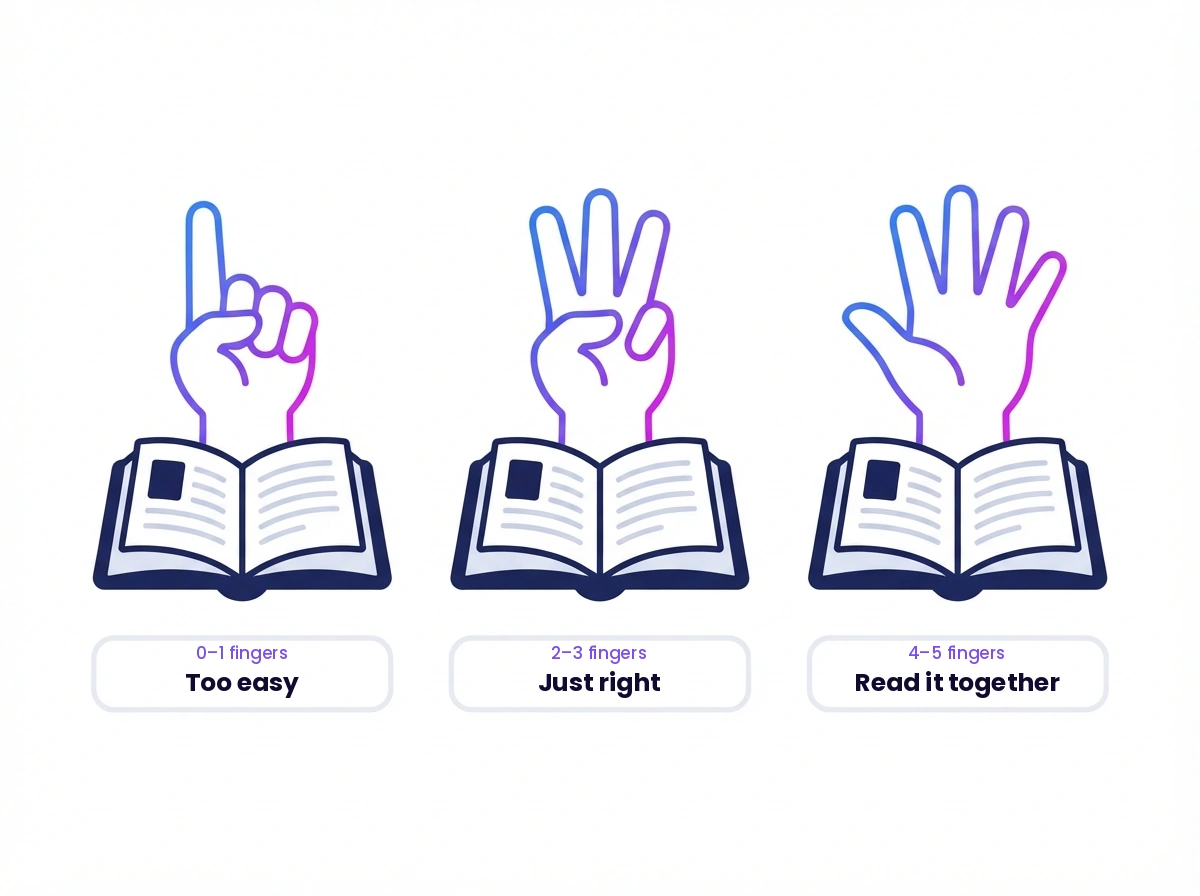
Treat it as a starting point, not a verdict. A child desperate to read a slightly harder book about their favourite topic will often push through, because interest carries them. That is how readers grow.
The same goes for Lexile scores, which some schools report. A Lexile measure only describes how complex the sentences and vocabulary are. The Lexile publisher itself says it does not consider age-appropriateness, interest or prior knowledge, and advises families to never take a book out of a child’s hand because of its Lexile measure.
3. Content third: reading level is not maturity level
A confident 10-year-old can decode the words in a book written for 16-year-olds. That doesn’t mean they’re ready for its themes. Before handing over a book from an older band, read the back cover, skim a review and, if you can, read the first chapter yourself. Where a book below deals with heavier themes, there’s a short content note so you can decide.
What are the best books for kids at each age?
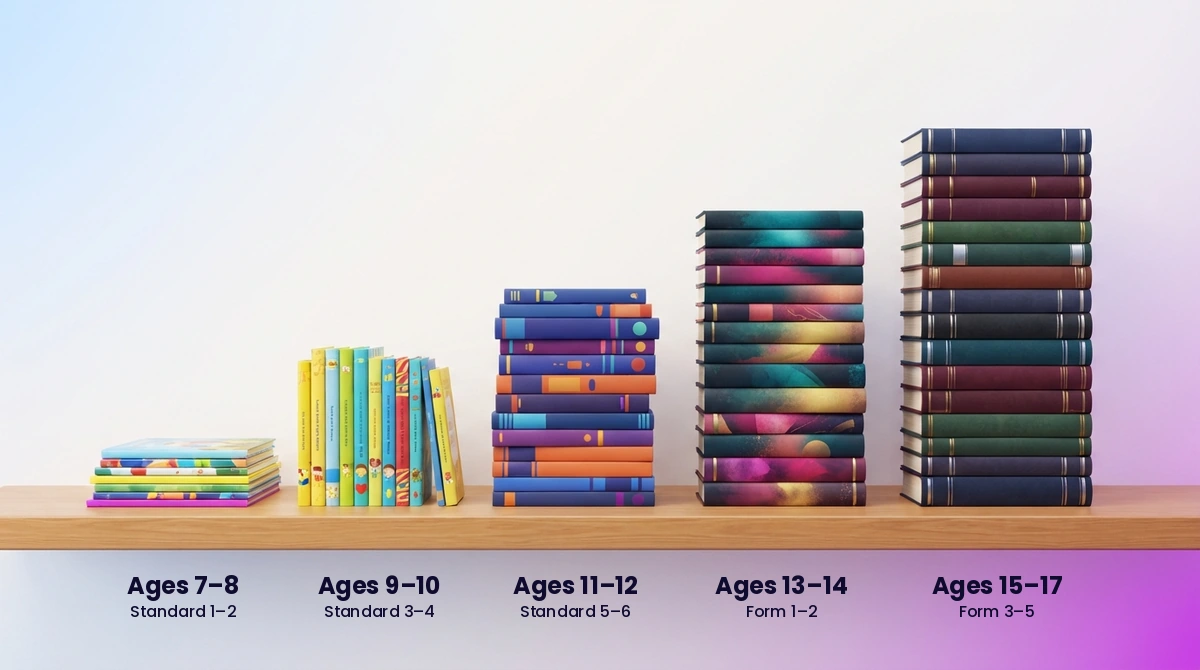
The right book changes as your child moves from first chapter books at 7 to adult classics by 17. Every book below has stayed popular with children for years. Ages are a guide: a strong reader can move up a band, and a reluctant reader is better off one band down with a book they love.
| Age (school year) | Reading stage | What to look for | A safe first pick |
|---|---|---|---|
| 7–8 (Standard 1–2) | Moving from picture books to chapter books | Short chapters, big print, pictures on most pages, a series | Mercy Watson to the Rescue |
| 9–10 (Standard 3–4) | Reading alone for longer | Humour, strong characters, part-comic formats | The Wild Robot |
| 11–12 (Standard 5–6) | Full novels, bigger ideas | Friendship, fairness, mystery, fantasy worlds | Holes |
| 13–14 (Form 1–2) | Reading to understand people and the world | Memoir, dystopia, classic adventure | The Giver |
| 15–17 (Form 3–5) | Adult-level books | Classics, history, non-fiction that sharpens thinking | Animal Farm |
Ages 7 to 8 (Standard 1–2): first chapter books
This is the bridge from picture books to “real” books. Look for short chapters, plenty of pictures and, ideally, a series. Once a child finishes book one, they already know the characters, so book two feels easier.
- Mercy Watson to the Rescue by Kate DiCamillo (2005). A pig who loves hot buttered toast, big print and full-colour pictures. The perfect first chapter book.
- Frog and Toad Are Friends by Arnold Lobel (1970). Gentle, funny friendship stories in very simple sentences, ideal for a child’s first books read entirely alone.
- Magic Tree House series by Mary Pope Osborne (from 1992). Two siblings travel through time to dinosaurs, pyramids and rainforests. With dozens of books, a hooked child won’t run out.
- Fantastic Mr Fox by Roald Dahl (1970). Short, clever and very funny. A brilliant first Dahl to read aloud together before the longer ones.
- Dog Man series by Dav Pilkey (from 2016). A graphic novel about a half-dog, half-policeman hero. The book that turns many reluctant readers, especially boys, into eager ones.
Ages 9 to 10 (Standard 3–4): keeping the spark through “the decline by nine”
This is the age to watch. Scholastic found that the share of children who say they love reading drops from 40% at age 8 to 28% at age 9, just as books get longer and less illustrated. Choose books with humour, heart and a quick pace.
- The Wild Robot by Peter Brown (2016). A robot wakes up alone on a wild island and learns to survive. Very short chapters make it feel fast.
- Charlotte’s Web by E. B. White (1952). A classic about friendship and loss, and often the first book that makes a child feel something deeply.
- Matilda by Roald Dahl (1988). A girl who loves books takes on terrible grown-ups. Bookish children see themselves; others just enjoy the revenge.
- Diary of a Wimpy Kid by Jeff Kinney (2007). Half diary, half cartoon. Light, yes, but it gets pages turned, and that’s the point at this age.
- Kampung Boy by Lat (1979). Malaysia’s best-loved cartoonist on growing up in a kampung. It gives Malaysian children their own world in a book, and everyone else a window into it.
Ages 11 to 12 (Standard 5–6): full novels and bigger questions
Upper-primary readers are ready for longer novels with real stakes: fairness, belonging, courage and doing the right thing when it’s hard. These are the books that start dinner-table conversations.
- Holes by Louis Sachar (1998). Three stories that slot together like a puzzle. It rewards careful readers and won the Newbery Medal.
- Wonder by R. J. Palacio (2012). A boy with a facial difference starts school for the first time, told by several narrators. A powerful book for building empathy.
- Harry Potter and the Philosopher’s Stone by J. K. Rowling (1997). Still the most reliable way into long fantasy novels. Later books grow darker, so read ahead as they go.
- Front Desk by Kelly Yang (2018). A 10-year-old immigrant girl helps run a motel in America while standing up to unfairness. Warm, brave and full of grit.
- New Kid by Jerry Craft (2019). A graphic novel about starting at a new school where you don’t fit in, and the first graphic novel to win the Newbery Medal.
Looking for books that teach children about money? See our list of the best financial literacy books for kids and teens.
Ages 13 to 14 (Form 1–2): reading to understand people
In lower secondary, reading competes with homework, phones and friends, and often loses. Enjoyment and daily reading drop most sharply in the early teenage years. Books for this age need to feel grown-up and relevant, not like homework.
- The Giver by Lois Lowry (1993). A “perfect” society with a dark secret. Short, gripping and ideal for discussing choice and freedom.
- The Hobbit by J. R. R. Tolkien (1937). The original epic adventure, and a gentler way in than The Lord of the Rings.
- I Am Malala (Young Readers Edition) by Malala Yousafzai with Patricia McCormick (2014). The true story of a girl who stood up for every girl’s right to go to school. Content note: describes a violent attack.
- Brown Girl Dreaming by Jacqueline Woodson (2014). A memoir told in short poems. Teens who say they “don’t like long books” often fly through it.
- The Outsiders by S. E. Hinton (1967). Rival teenage gangs, loyalty and belonging, written by an author who was herself a teenager. Content note: gang violence and deaths.
Ages 15 to 17 (Form 3–5): the books that stay with them
Upper-secondary students can read anything an adult can. This is the time for classics that shaped how the world thinks, and for non-fiction that trains them to question what they’re told.
- Animal Farm by George Orwell (1945). A short fable about power and how it corrupts. Readable in a weekend, debated for a lifetime.
- To Kill a Mockingbird by Harper Lee (1960). Justice, prejudice and moral courage, seen through a child’s eyes. Content note: racism and a trial for assault.
- The Book Thief by Markus Zusak (2005). A girl in Nazi Germany steals books, narrated by Death. Content note: war and loss.
- The Diary of a Young Girl by Anne Frank (1947). The real diary of a Jewish teenager hiding during the Second World War. History told by someone their own age.
- Factfulness by Hans Rosling (2018). A data-driven, surprisingly hopeful book about how the world really works. Brilliant for critical thinking.
Do graphic novels and comics count as real reading?
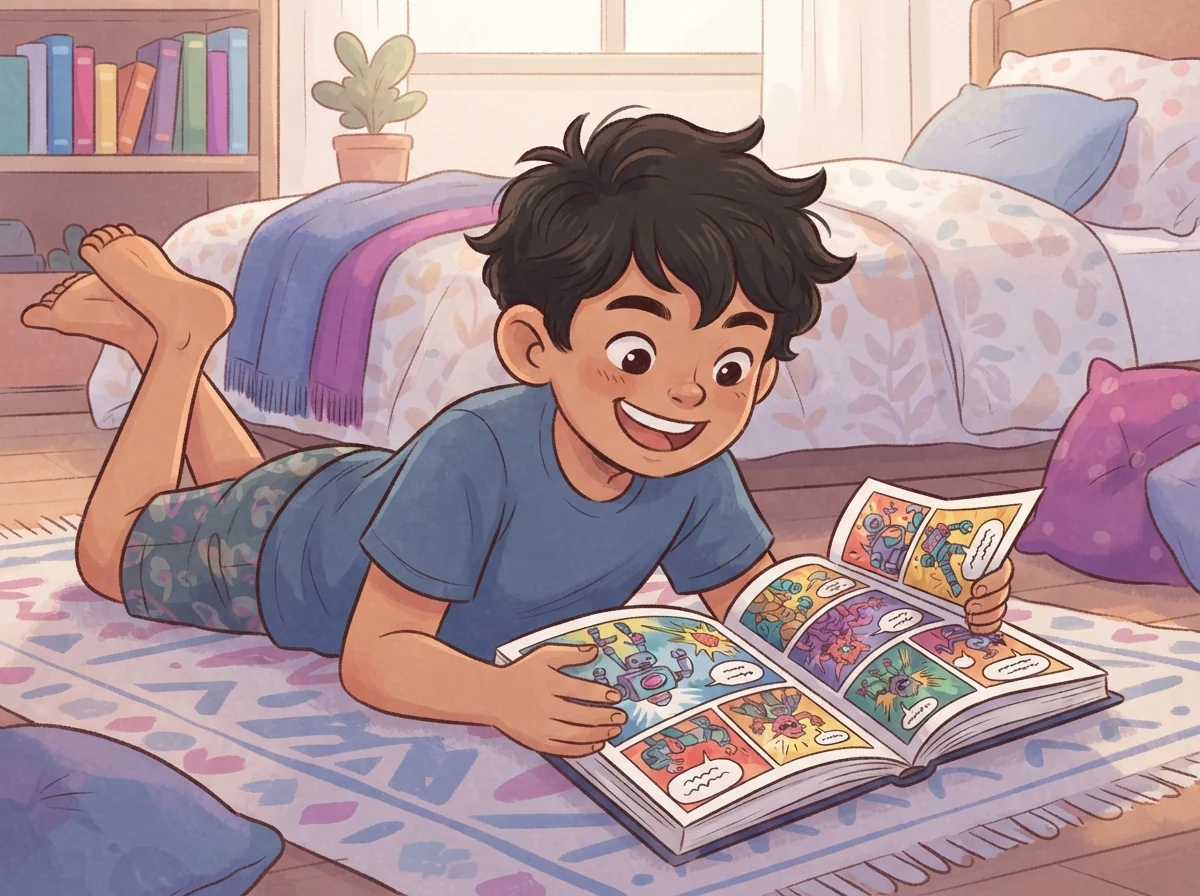
Yes. Teachers and literacy researchers agree that graphic novels are real reading. Following a story across panels means holding words and pictures together, inferring what happened between frames and reading characters’ emotions. Researchers at Teachers College, Columbia University note that the brain processes comic panels using many of the same networks it uses for language.
The motivation effect matters just as much. A National Literacy Trust survey found that nearly twice as many children who read comics in their free time enjoy reading as those who don’t (58.6% vs 33.1%). Keen readers may simply be more likely to pick up comics, but either way they keep children reading. Graphic novels also build visual literacy, one of the types of literacy children now need. That’s why Dog Man, Kampung Boy and New Kid sit on the list alongside the classics.
Should you still read aloud to older children?
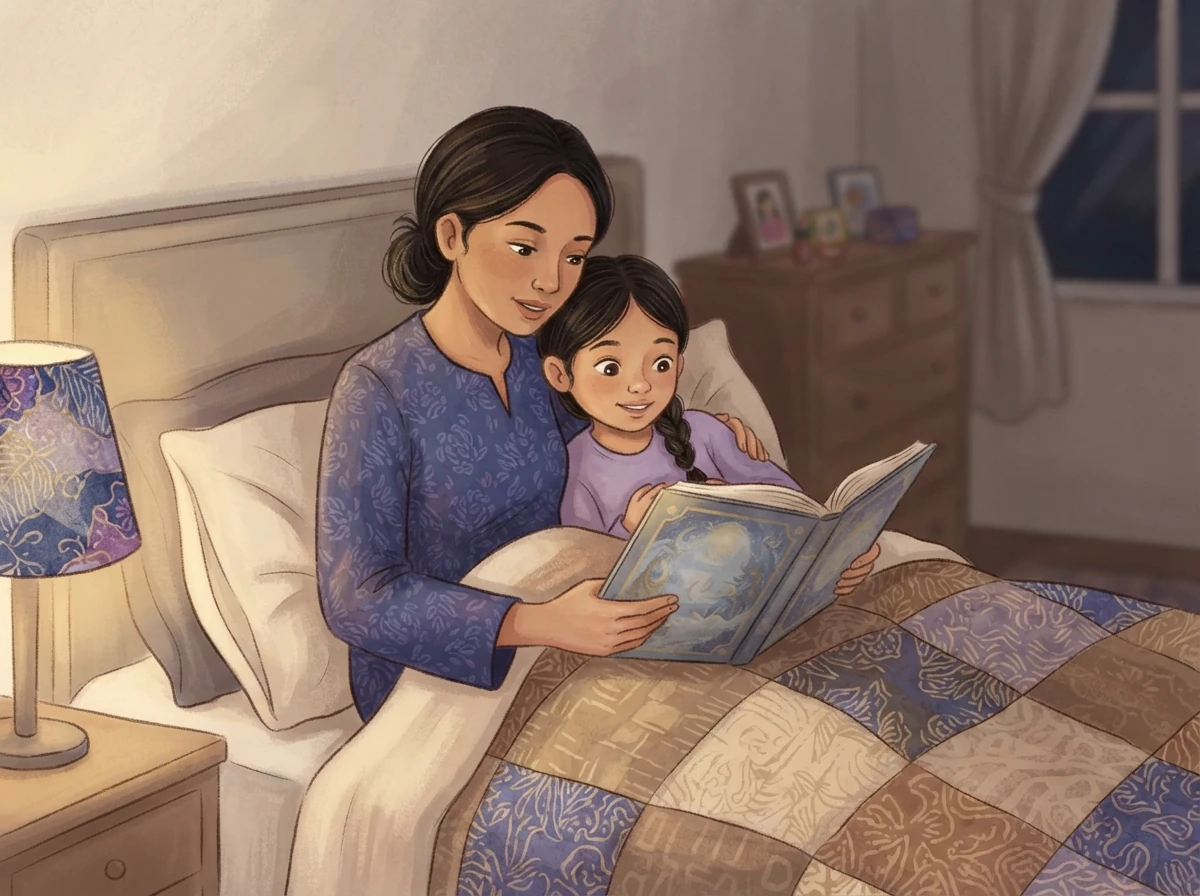
Yes, well past the age they can read alone. Most families stop once a child reads independently. Scholastic found that only about one in six children aged 9 to 11 is still read to at home most days, yet four in ten children who are no longer read to wish their parents had kept going.
Reading aloud lets you share books a level or two above what your child can manage alone, like Charlotte’s Web for a 7-year-old or The Hobbit for a 10-year-old. You handle the hard words; they get the story, the vocabulary and the conversation. Ten minutes before bed is enough.
Where can you find good kids’ books in Malaysia?
Libraries, book sales and swaps will keep good books coming without a big budget.
- School and public libraries. Free, and the librarians are often the best “what next?” advisers you’ll find.
- BookXcess and the Big Bad Wolf Book Sale. The book sale that started in Petaling Jaya in 2009 is known for discounted English titles, especially children’s books.
- Major bookshops such as Kinokuniya, MPH and Popular, for new releases and the next book in a series.
- Book swaps with friends, cousins and classmates. A friend’s recommendation often lands better than a parent’s.
Books in Bahasa Melayu, Chinese and Tamil count too. A child who reads widely in any language is building the same habit.
What this means for your child
A reading list only works if the books actually get read, and a few habits make the difference.
- Keep books visible. Scholastic found frequent readers have, on average, 139 children’s books at home, compared with 74 for infrequent readers. A basket by the sofa beats a shelf in the spare room.
- Talk, don’t test. Ask “Which character would you want as a friend?” rather than quizzing them on what happened. For structured practice, our free reading comprehension PDFs are graded by level and ready to print.
Start with one title from their age band, let them choose, and let the next book come from there.
Coming in 2027: Reading Riot
EyeQBoost is taking part in Reading Riot, a reading competition that treats reading like a sport. Pupils race through passages on an app, then answer questions to prove they understood them, with rounds that lead from school to national and international finals. In South Africa, nearly 12,000 learners took part in 2026. Want your child or school involved? Get in touch.
Frequently asked questions
What is a good first chapter book for a 7-year-old?
Look for short chapters, large print and a picture on most spreads. Mercy Watson to the Rescue and Frog and Toad Are Friends are reliable first picks. Once your child can read a picture book smoothly on their own, they are usually ready to try one.
How many books should my child read in a year?
There’s no magic number, but habit makes a big difference. Scholastic found that frequent readers aged 6 to 11 read about 43 books a year, against 21 for infrequent readers. Aim for a book always on the go rather than a target to hit.
My child keeps rereading the same book. Should I worry?
No. Rereading is how children build fluency and confidence, and they often notice new details each time. Keep the favourite, and place one new book from the same author or series beside it.
How do I get a reluctant reader, especially a teenage boy, to read?
Start with what they already love: football, gaming, cars, science, funny stories. Graphic novels, non-fiction and short series are all fair game. Boys’ reading enjoyment has fallen most sharply between ages 11 and 16, so let them choose and drop any pressure about “proper” books. For the skills underneath, see how to improve your child’s English reading skills.
Should children finish every book they start?
No. Adult readers put books down all the time, and children should be allowed to as well. A few chapters is a fair try. Forcing a child through a book they dislike teaches them that reading is a chore.
Are classic books still worth reading today?
Yes, alongside newer books. Classics like Animal Farm and To Kill a Mockingbird give children shared reference points and big ideas to argue about. Modern books often reflect their own lives more closely. A healthy reading diet mixes both.
How can teachers build a classroom library on a small budget?
Start with discounted book sales such as the Big Bad Wolf, then add parent donations, a termly class book swap and loans from the school library. Rotate a small box of titles every few weeks so the shelf always looks new. Let pupils recommend books to each other; a peer’s pick often travels further than a teacher’s.
Want to know where your child’s reading really stands, and which books will stretch them next?
References
- Australia Reads. (2025). New report shows crisis in teen reading and offers insights for boosting engagement.
- Big Bad Wolf Books. (n.d.). About us.
- Christian Science Monitor. (2015). A child’s favorite book is one he or she chose, says study.
- MetaMetrics. (n.d.). Lexile Find a Book tips and Connect your students with books.
- National Literacy Trust. (2025). Rethinking reading for pleasure in schools.
- National Literacy Trust. (2026). Children and young people’s reading in 2026.
- Scholastic. (2013). Kids & Family Reading Report, 4th edition.
- Scholastic. (2015). Kids & Family Reading Report, 5th edition.
- Scholastic. (2019). Kids & Family Reading Report, 7th edition.
- Scholastic. (n.d.). The five finger rule.
- Teachers College, Columbia University. (n.d.). From panels to practice: supporting graphic novel readers beyond the classroom.
- National Literacy Trust. (2024). Children and young people’s engagement with comics in 2023.
- Scholastic. (2019). Kids & Family Reading Report, 7th edition: Navigate the world.
About the author: Reuben Bykersma is the Catalyst and co-founder of EyeQBoost, a holistic education company helping children thrive in school and beyond, not just in exams. He has been teaching since the age of 15. He co-built a tutoring academy that taught more than 200 students over five years, and has taught English at a private school. Today he is building EyeQBoost to bring research-informed learning to more students, and to give parents and teachers honest, practical tools to support them. His aim is to make a lasting difference in education for students, teachers and parents alike. Connect on LinkedIn